
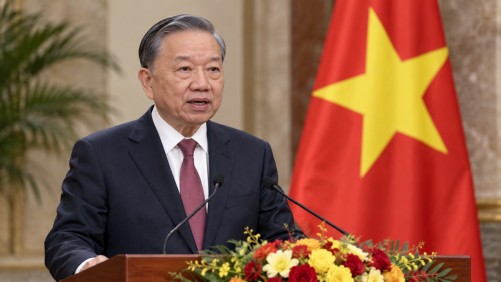
In a recent meeting in Hà Nội, Vietnam’s Party General Secretary and President Tô Lâm emphasized the need for a legal framework that balances stability and flexibility to support the country’s investment, economic growth, and technological advancement. Lâm underscored that the nation’s laws should offer businesses and citizens clear understanding of their rights and obligations while remaining adaptable to the challenges posed by scientific advancements, new business models, climate change, and international integration.
Addressing the connection between lawmaking and enforcement, Lâm stated that the effectiveness of these processes should be measured by their ability to eliminate administrative and investment barriers, reduce compliance costs, and unlock resources, all while safeguarding the legitimate rights and interests of both citizens and businesses. He called for a thorough review of existing legal documents, particularly those impeding investment and business activities, and urged authorities to address issues within the reorganized state apparatus and the execution of citizens’ rights.
Looking towards the future, Lâm outlined objectives for Vietnam’s legal system, setting measurable targets for 2030, and aiming for a modernized framework by 2045. This future system should be supported by digital data and artificial intelligence, complemented by a transparent and professional judicial structure. He also called for greater accountability in the implementation of laws and policies, insisting that each policy should clearly define the responsible agencies, necessary resources, implementation conditions, and desired outcomes. Furthermore, administrative documents should not impose requirements beyond those established by law.
Emphasizing a proactive approach, Lâm advocated for authorities to focus on preventing violations and managing risks instead of relying primarily on punitive measures. He suggested that digital transformation and data-driven governance could enhance compliance, decrease administrative expenses, and improve the efficiency of resolving civil and commercial disputes.