
In a determined push towards becoming a formidable economic force, Việt Nam is setting ambitious goals to enhance its corporate landscape, aspiring to create competitive corporations on a regional and global scale. This vision is encapsulated in the Politburo’s recent resolutions, notably Resolution No. 68-NQ/TW, introduced in May last year, which aims to cultivate a vibrant private sector with 2 million active enterprises by 2030. This includes at least 20 major corporations participating in global value chains. Complementing this, Resolution No. 79-NQ/TW, unveiled in January this year, targets the development of state-owned enterprises, with aspirations for 50 to rank among Southeast Asia’s top 500 companies and for one to three to reach the global top 500 by 2030.
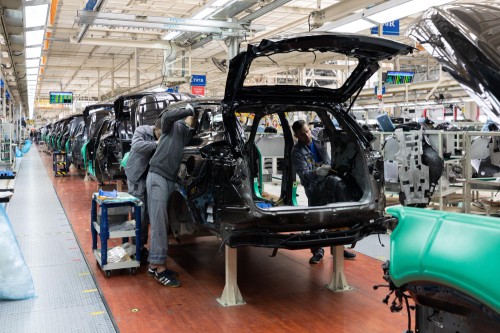
The country’s economic landscape has already witnessed the rise of significant players. Over the past 40 years since the Đổi mới reforms, major economic groups have emerged across diverse sectors. THACO, for instance, has established a robust automobile and mechanical engineering ecosystem in Quảng Nam Province, while VinFast has marked its presence as Việt Nam’s pioneering electric vehicle manufacturer, with operations extending to North America, Europe, and Southeast Asia. Additionally, Hòa Phát Group has grown into one of Southeast Asia’s leading steel manufacturers. In the technology sector, FPT stands out as a major IT company offering digital transformation services worldwide. Consumer goods giants like Vinamilk and Masan Group have expanded their reach significantly, with Vinamilk’s dairy products present in over 50 countries and Masan Group serving millions daily.
The infrastructure and real estate sectors have also seen transformative projects. Vingroup has undertaken large-scale developments, including urban projects, hospitals, and schools, while Sun Group and BRG Group have invested extensively in tourism infrastructure, helping to reshape economic regions. Despite these successes, Việt Nam’s business sector, with nearly 1.1 million enterprises by the end of last year, still faces challenges related to capacity and depth, as highlighted by Đậu Anh Tuấn from the Vietnam Chamber of Commerce and Industry. The reliance on capital over capability is a hurdle, as noted by Nguyễn Đức Hiển, suggesting that a focus on industrial sectors is crucial for Việt Nam to achieve its goal of becoming a modern industrialized nation by 2045.
Experts such as economist Trần Đình Thiên emphasize the need for strong economic groups to lead the economy and compete on a global scale. This requires a shift from broad-based support policies to targeted strategies that empower businesses capable of leading and fostering broader economic growth. Drawing from international examples, like Japan’s strategic investment in specific industries and South Korea’s development of conglomerates such as Samsung and Hyundai, Việt Nam is poised to develop its own industrial giants. The recent resolutions provide a coherent policy framework, laying the groundwork for Vietnamese enterprises to emerge as significant players in global industrial value chains.
With the policies in place, the next decade presents an opportunity for Việt Nam to realize its ambitions on the international stage. However, the success of this endeavor hinges on effective implementation and a steadfast commitment to the chosen development path. If executed well, Việt Nam could see its economic groups gain regional prominence and gradually secure their place in the global economy, aligning with the nation’s aspiration to “rise strongly” internationally.