
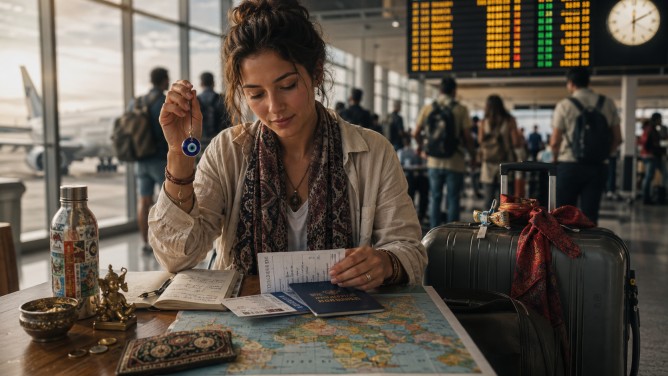
Embarking on a journey often brings a mix of anticipation and cherished customs that make each trip memorable. Across the globe, cultures have developed unique superstitions to ensure both good fortune and safety while traveling. Here are seven intriguing travel beliefs that persist in various regions, each reflecting a blend of cultural wisdom and personal comfort.
In the Balkans, a clove of garlic tucked into one’s luggage is more than just a culinary staple; it’s a talisman against negative energy and the evil eye. Many travelers from this region believe that garlic can ward off misfortune on their travels. Similarly, touching the exterior of an airplane before boarding has become a modern-day ritual for some. This gesture, meant to bring good luck, also comforts nervous flyers who find solace in these small acts of faith.
Some traditions focus on the importance of beginnings. Travelers who step onto an aircraft with their right foot first do so with the hope of embarking on their journey with good fortune. In parts of the Middle East and the Balkans, family members might pour or sprinkle water behind a departing traveler, a custom symbolizing a smooth trip and a safe return. This ritual underscores the hope for an uninterrupted journey and the joy of reunion.
Numbers often play a significant role in travel superstitions. While the number 13 is a common symbol of bad luck in Western cultures, in China, the number 4’s pronunciation closely resembles the word for death, making it equally avoided. In Italy, the number 17 carries a similar stigma. These beliefs can influence everything from hotel room allocations to flight numbers, reflecting the universal human tendency to avoid potential misfortune.
Other customs revolve around preparation and timing. In Slavic cultures, sitting quietly on packed luggage for a few minutes before departure is a time-honored tradition. This pause allows travelers to mentally prepare for their journey. Additionally, in several cultures, sweeping the floor immediately after a traveler departs is considered to bring bad luck, as it may symbolically sweep away their good fortune. While these superstitions lack scientific evidence, they remain a fascinating aspect of travel culture, serving more to preserve family traditions and cultural identity than to prove their efficacy. For many, these rituals are a meaningful way to celebrate the excitement of new adventures.