
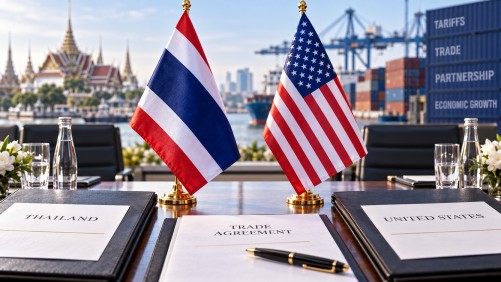
In the face of potential increased tariffs, Thailand is intensifying its negotiations with the United States to establish a reciprocal trade agreement. This move is part of Bangkok’s strategy to protect its exporters amid ongoing tariff challenges and investigations initiated by the U.S. government.
Currently, Thai exports are subjected to a 12.5% tariff under a Section 301 measure due to concerns over forced labor. Additionally, a U.S. investigation launched in March 2026, examining structural excess production capacity, could impose further duties on Thai goods. This investigation includes several other major trading nations, adding pressure on Thailand to secure favorable trade terms.
Thai authorities have responded by presenting detailed data to contest U.S. claims of excess production capacity and potential transshipment. They argue that production capacities in key sectors are actually higher than U.S. assessments suggest, and they aim to rectify these evaluations to avoid additional tariffs.
As part of the ongoing talks, Thailand is striving for a trade agreement that would offer tariff conditions on par with other regional competitors like Malaysia and Indonesia. Such an Agreement on Reciprocal Trade (ART) could enhance market access for Thai exporters and provide more stability in their trading terms with the U.S., even though the final details of the tariffs are still under discussion.
The proposed agreement also seeks to address U.S. concerns about trade barriers and investment access in Thailand. Any finalized deal would still require ratification through Thailand’s domestic procedures before implementation. Discussions involving Thai Prime Minister Anutin Charnvirakul and U.S. President Donald Trump are anticipated, as they work towards resolving these trade issues and ensuring equitable terms for both nations.